
Storm Protection Through Integrated Power Backup
Anker SOLIX in Leroy for homes combining premium metal roofing with whole-home backup power during outages
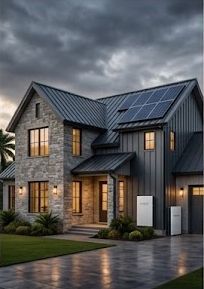
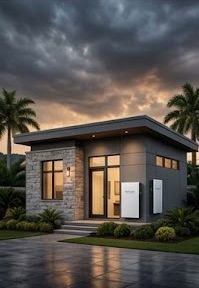
Power outages during severe weather leave homes without climate control, refrigeration, and communication systems precisely when external conditions make manual operation difficult or unsafe. TLA Roofing Pro installs Anker SOLIX E10 backup systems as part of Storm-Ready Home configurations that pair premium metal roofing with scalable battery storage and solar power integration. The system provides reliable backup power without the noise, fuel storage, and maintenance requirements associated with traditional generators, creating a solution where energy availability continues regardless of grid status in Leroy.
The SOLIX E10 uses modular battery architecture that scales capacity based on household power demands and desired backup duration, rather than requiring homeowners to purchase oversized fixed-capacity systems. Industry-smart technology manages charge and discharge cycles to extend battery lifespan while prioritizing critical loads during outages. When paired with solar panels, the system can recharge during daytime hours even when grid power remains unavailable, extending backup capability beyond the initial battery capacity alone.
Arrange an energy evaluation to determine backup capacity requirements based on your essential loads and typical outage duration in this area..

What Scalable Battery Storage Accomplishes During Extended Outages
Modular expansion allows you to start with baseline capacity for essential circuits—refrigeration, medical equipment, communication devices, lighting—and add storage modules as budget allows or as power needs increase over time. The system monitors battery state, solar production, grid status, and load demand simultaneously, automatically switching between grid power, solar input, and battery discharge based on real-time conditions. Unlike generator systems that require manual startup or maintenance during long storage periods, the battery system remains ready without periodic exercise runs or fuel stabilization.
After installation, you notice the home maintains interior climate control and refrigeration during outages that would otherwise require discarding food and relocating to cooler or heated spaces. The absence of combustion exhaust and noise allows safe indoor installation and operation during storms when external generator placement would expose equipment to wind and water damage. Solar integration means extended outages do not deplete the battery if sunlight allows recharging, creating renewable backup capability rather than dependence on fuel delivery or stored reserves.
Premium metal roofing paired with solar panels creates a long-term energy platform where the roof substrate outlasts typical solar panel lifespans, avoiding the need to remove and reinstall panels during roof replacement as occurs with shorter-lived asphalt shingle systems. The metal roof provides mounting points and electrical pathways for solar integration without penetrating organic roofing materials that degrade around fastener holes. Battery storage shifts solar production to nighttime use and outage periods, increasing the functional value of the solar investment beyond simple grid offset..
Questions Before Starting Your Project
Homeowners considering integrated roofing and energy systems need information about installation coordination, capacity planning, and operational differences from traditional backup approaches.
How does battery backup differ functionally from a standby generator for home use?
Battery systems provide instant automatic switching without startup delay, operate silently indoors, require no fuel storage or delivery, and need minimal maintenance compared to engine-driven generators that demand periodic oil changes, load testing, and fuel system upkeep. Generators provide longer runtime from a single fuel tank but depend on fuel availability and create exhaust that requires outdoor installation and ventilation clearances.
What does modular scalability mean for initial system cost and future expansion?
Modular design allows purchasing baseline capacity at project start and adding battery modules later without replacing existing components, spreading cost over time rather than requiring full investment upfront. Each module integrates with existing units through plug-and-play connections rather than requiring system reconfiguration or controller replacement, making expansion straightforward when budget or needs change.
How long does backup power last during an outage in Leroy?
Runtime depends on battery capacity and household load—a baseline system powering refrigerator, lights, and essential outlets may provide eight to twelve hours, while expanded capacity or reduced load extends that to multiple days. Solar charging during outages adds production equal to panel capacity and sunlight hours, potentially indefinitely extending backup if loads remain within solar generation capability during daylight periods.
When does combining metal roofing with solar installation provide better long-term value?
Metal roofs lasting fifty years eliminate the need to remove and reinstall solar panels during roof replacement, avoiding labor costs and system downtime associated with mid-life roof changes under panel arrays. The structural rigidity and attachment options of metal roofing also simplify solar mounting compared to flexible or irregular surfaces like shake or tile that complicate bracket placement and waterproofing.
What electrical modifications are required to integrate battery backup with existing home circuits?
Installation includes transfer switching equipment that isolates backup circuits from grid power during outages, preventing backfeed to utility lines and allowing the battery to power selected loads independently. TLA Roofing Pro coordinates electrical work to identify critical circuits, install isolation hardware, and verify proper operation before final system commissioning.
TLA Roofing Pro provides load analysis and capacity modeling to help you select appropriate battery sizing and solar panel configuration. Contact us to review system integration options and obtain a combined project estimate covering roofing, solar, and energy storage components.